 Football
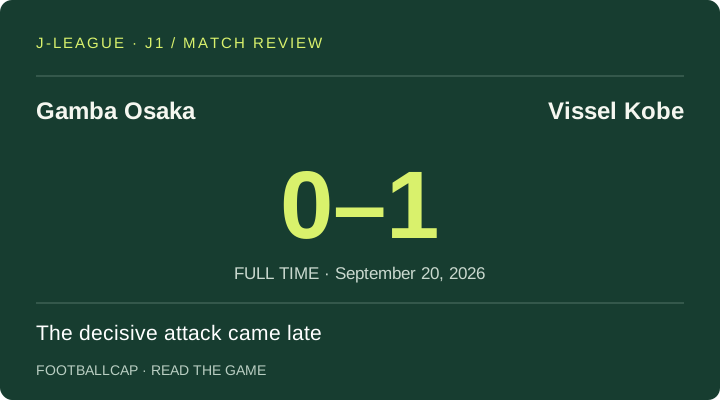
Vissel Kobe beat Gamba Osaka 1–0 at Panasonic Stadium Suita on September 20, with Erik scoring in the 90th minute. For almost the entire match, the scoreboard offered no separation. The final attack that mattered changed that.
Gamba’s activity did not produce a goal
The official J.League match record lists Gamba with 16 attempts to Kobe’s 14 and five shots on target to three. Those figures describe attacking activity, not the difficulty of each chance.
Mainichi’s report, carried by TNC, credits Shuichi Gonda with important saves and describes a late defensive recovery by Jean Patric before the winning goal. Its account of the winner begins with a long ball and contested possession before the delivery to Erik.
That combination gives the result more substance than a simple claim that Kobe waited for one chance. Keeping the game scoreless required interventions before the decisive finish.
Why the attack begins before the assist
A second ball can connect an ordinary clearance or aerial duel to a dangerous attack. Winning it matters because the opposition may be moving outward, expecting the first defensive action to have ended the threat.
The next pass then has a different opportunity: it can attack defenders who are changing direction rather than standing in their preferred positions. This is a general mechanism to look for in a replay, not a reconstruction of every player’s location in the goal.
The same principle applies at the other end. A forward who recovers during a transition can preserve the platform for the attack that follows. Those actions rarely occupy the headline, but they can be just as important as the finish.
What the numbers leave open
Shot totals do not tell us the angle, pressure or goalkeeper positioning for each attempt. Without verified expected-goals data, there is no sound basis here for assigning a numerical measure of which side should have won.
What is certain is the sequence: Gamba failed to convert their opportunities, Kobe stayed in the match, and Erik supplied the decisive goal at the end of regulation time.
Continue with Machida–Kashiwa, the other Sunday match in this J-League series.
References
- J.League — official result and match statistics
Source checked: 2026-09-21 - Mainichi reporting via TNC — match account
Source checked: 2026-09-21
Match facts were checked against the sources below on September 21, 2026. Tactical explanations are FootballCap interpretations of published reporting, not independent full-match or tracking analysis.